WEBINAR
Addressing Manufacturing and Characterization Challenges and Opportunities with
Novel AAV Capsids
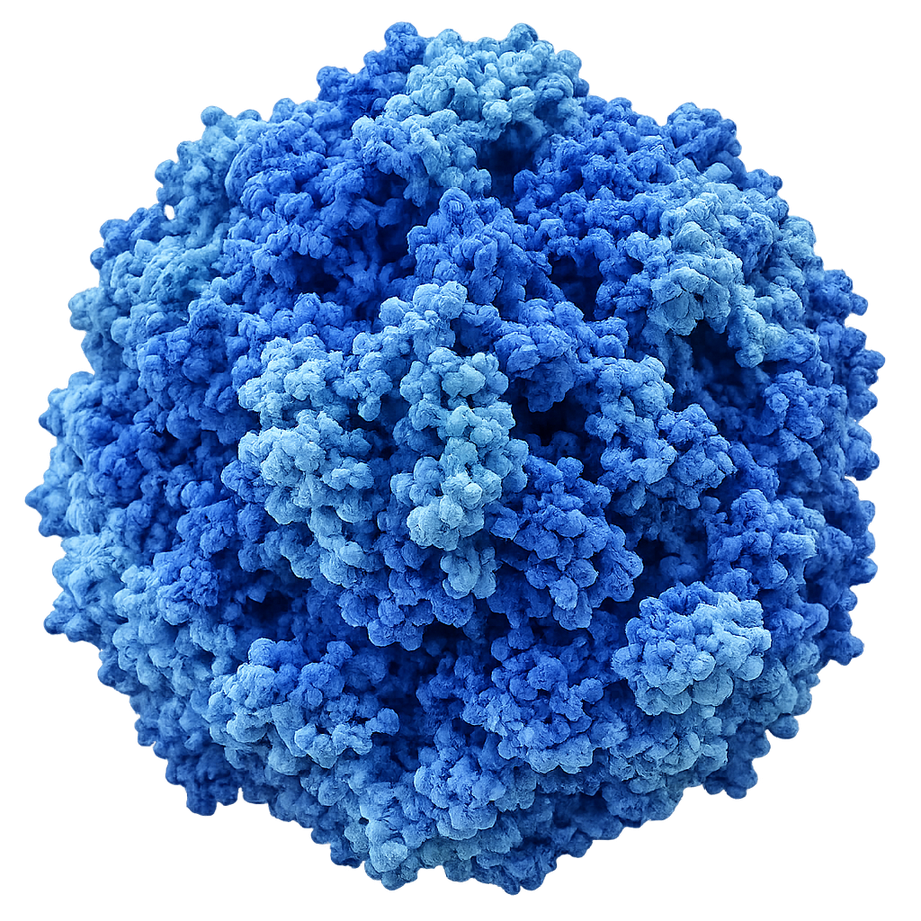
Capsid engineering has moved to the center of AAV gene therapy strategy. Development teams are moving away from off-the-shelf library options toward rationally designed, directed methods that produce novel capsids for specific indications.
That shift raises the stakes for characterization. A novel capsid will not necessarily behave like the serotypes before it, so analytical assays, immunogenicity assessments, and potency methods often need to be rebuilt rather than reused. Getting this right early is what keeps a promising capsid moving through development and the regulatory review that follows.
Cell & Gene brought together an expert panel to work through what novel capsids mean for immunogenicity, analytical assays, machine learning, manufacturing, and regulatory strategy. The session featured GenoSafe’s Laurence Jeanson-Leh and Sabrina Triffault, alongside Jacob Smith of Viralgen and Daniel Lourenco and Jacob Staudhammer of Darkhorse Consulting. It was moderated by Viralgen Chief Commercial Officer Andy Holt.
GenoSafe is a specialized analytical and quality control lab for gene therapy, supporting developers worldwide with immunogenicity testing, biodistribution studies, potency assays and characterization across novel and established capsids.
GenoSafe provides specialized analytical expertise for gene therapy programs, from preclinical development through clinical stages.



Meet your GenoSafe experts

Laurence Jeanson-Leh
Analytical Director
GenoSafe
Molecular biology and vectorology, supporting analytical development for gene therapy products.

Sabrina Triffault
Analytical Director
GenoSafe
Immunology, anti-drug antibody (ADA) assessment, immune bioassays, and analytical strategies for gene therapy products.
Facing characterization challenges
with a novel capsid?
GenoSafe’s team develops and validates the analytical, immunogenicity, and
potency methods your program needs, tailored specifically to your novel AAV
capsid.
Q&A
Explore the answers to common questions about the webinar
Why is the industry moving toward novel AAV capsids?
Staudhammer: Just a few years ago, most programs focused on a handful of standard capsids, selecting one based on the target indication and hoping it worked. Over the past few years, we’ve seen a shift toward rational design and then increasingly toward directed evolution, where truly novel capsids are discovered with tropism tailored to specific indications and routes of administration.
I think we’ll continue moving toward a future where developers have a broader toolbox of capsids designed for particular diseases, resulting in therapies that are more efficient, more effective, and ultimately more affordable.
Smith: I also think the innovation techniques themselves have matured. We’ve moved beyond simply asking whether a capsid transduces well in the lab to asking whether it delivers a clinically meaningful benefit at a viable dose. Across the industry we’ve seen a much stronger push over the last several years to reduce dose while improving tissue specificity. That has important implications for manufacturing because, if we can achieve efficacy with lower doses, we also reduce the burden on manufacturing systems to produce extremely large quantities of vector.
Many developers describe a new vector as “basically AAV9.” Why can that be a risky assumption?
Triffault: My first reaction is, if it’s basically the same, then clearly it’s not AAV9. The immune system exists to distinguish between different structures. Even a single amino acid difference may mean an assay validated against AAV9 no longer behaves the same way. From an immunological perspective, “basically the same” is not sufficient — you have to demonstrate it.
Smith: If it were really AAV9, we wouldn’t be having this conversation. Similar is not the same. That’s why I encourage developers not to assume platform fit. Incorporate manufacturability early rather than assuming you can simply plug the capsid into an existing manufacturing process.
We’ve seen modifications affect productivity, residual impurities, affinity purification performance, and even full-to-empty enrichment during downstream processing. Depending on what changed, even subtle surface modifications can influence how the product moves through the entire process.
Staudhammer: When someone says it’s basically AAV9, I always ask why they’re making that claim. Is it supported by data, or is it an attempt to avoid additional studies or characterization? If you skip analytical characterization or biodistribution studies because you assume similarity, those decisions can create much bigger problems later during regulatory review. It’s better to generate the data early than discover unexpected behavior after significant development work has already been completed.
How should manufacturability factor into capsid selection?
Smith: Manufacturability should be part of the down-selection process, not something evaluated after a biological candidate has already been chosen. When we evaluate a new capsid, we look at productivity, specific productivity, packaging efficiency, affinity recovery, and how the material behaves throughout purification. Those measurements help us understand whether we’re seeing assembly issues or other challenges that may not be obvious initially.
We’ve seen cases where affinity recovery changes because of surface modifications, and in rare cases, we’ve even observed capsids that lose integrity during purification. Those examples reinforce why manufacturability should be evaluated alongside biological performance rather than afterward.
What analytical challenges do novel capsids introduce?
Jeanson-Leh: From an analytical perspective, one of the biggest changes we’ve seen is simply the volume of novel capsids entering development. Today, about half of the AAV programs we support involve next-generation capsids, making assay adaptation a routine part of development. The important point, however, is that regulatory expectations haven’t changed. Regardless of how innovative the vector may be, the assays still need to be robust, sensitive, and fit for purpose.
For quality control, there are several key areas developers need to think about early. The first is identity testing. Many identity assays rely on antibodies, so an early question becomes whether a suitable antibody even exists for the new capsid. If it doesn’t, developers may need to generate one, and that can add considerable time to a program.
The second area is infectivity. The standard TCID50-based infectivity assay remains broadly applicable today because the capsids we’ve evaluated continue to transduce the appropriate cell models, but that shouldn’t be assumed indefinitely. Every new capsid should be evaluated to ensure the assay is still fit for purpose. Potency presents another consideration. Developers need a cell model that not only supports transduction but is also sufficiently robust for routine QC testing. Those two requirements don’t always align.
Finally, there’s safety testing, particularly assays used to detect replication-competent AAV. Those assays require positive controls built using the same capsid as the product being tested. That’s something developers need to plan for much earlier than they often do.
Triffault: For immunogenicity testing, my first question to every sponsor is simple: do you have a positive control? If the answer is no, then validating immunogenicity assays immediately becomes much more difficult.
There are two primary categories of assays we perform. One is the neutralizing antibody assay, which determines whether antibodies generated against the capsid prevent vector transduction. The second is the total antibody assay, typically based on ELISA or electrochemiluminescence methods. Both ultimately depend on having appropriate positive controls.
Sometimes sponsors tell us the capsid is based on AAV2 or AAV9 and suggest we simply use an existing anti-AAV antibody. That approach may allow the assay to function, but it creates important questions about specificity. The assay may detect antibodies against the parent capsid, but it won’t necessarily distinguish whether the immune response is directed against the modified region of the engineered capsid.
That’s why we encourage developers to think about these reagents very early. Ideally, they would have a capsid-specific monoclonal antibody available, but that usually isn’t realistic during early development. At a minimum, they should consider generating immune sera by immunizing animals so appropriate controls are available for assay development and validation.
It’s also important to remember that those controls need to support much more than a single validation exercise. They will be required throughout preclinical and clinical testing, with positive controls included on every analytical plate. Planning for those materials from the beginning can prevent significant delays later in development.
How are regulators likely to view modified capsids?
Staudhammer: We’re still in the early stages of understanding regulatory expectations for novel capsids, but what we’ve seen, particularly with the FDA, is a willingness to consider scientifically justified approaches. That said, even a few amino acid modifications can change biodistribution or immunogenicity. Our general position is to treat those as different products unless there’s a very strong rationale supported by data. Early engagement with regulators is important, but equally important is building the data package needed to support your scientific justification.
Lourenco: I don’t think developers should expect to rely entirely on precedent from established serotypes. Instead, they should build the characterization package needed to demonstrate that their specific product meets regulatory expectations. Early interactions with agencies can help establish what information they’ll expect and reduce uncertainty later in development.
Looking ahead, what developments are likely over the next few years?
Lourenco: I think platform manufacturing will remain fundamental, but we’ll also see increasing use of AI and machine learning to design capsids with improved biological and manufacturing characteristics. That will require strong collaborations between computational developers and organizations capable of generating the experimental data needed to validate those models.
Jeanson-Leh: I believe we’re entering the beginning of the post-AAV9 era. Novel capsids will become the default strategy in the near future, while AAV itself will remain a leading platform for gene therapy, with other work focused on optimizing features such as inverted terminal repeats.
Smith: I expect we’ll see more standardized screening frameworks that evaluate biology, manufacturability, and analytics together rather than independently. I do think we’ll probably see a better correlation between in vivo and in vitro potency assay development earlier on, as that’s something that’s continuing to pop up in regulatory feedback and guidance documents. And then the big prediction centers on the use of AI and really training the models to learn about structure versus function so that we get to a place of clear segmentation across capsids based on their intended application.
Triffault: I think we will manage to generate capsids which require much lower doses to reach efficacy, have reduced secondary effects, and are cheaper to produce. I think that, in two or three years, we will see the arrival of AI-designed capsids, which may solve the question of the re-administration of AAV vectors.
Staudhammer: As the toolbox of novel capsids continues to expand, developers will be able to select vectors based on the needs of individual indications rather than relying on a small number of traditional serotypes. I would say my big prediction is that over the next two to three years, we’ll see that average cost for these therapies come down by five- to 10-fold. And I think that by implementing novel capsids where the dose is 10 or 20 or 50 times less, I think that’s absolutely reasonable and should be something that the industry is working toward with these novel capsids.